
How to Scare Birds with a Laser Pointer: A Practical Plan for Farms, Gardens and Boats
Pigeons on the roof, gulls on the boat, starlings in the hedge, geese on the winter wheat: a site-by-site plan for using a green laser as a bird deterrent – including timing, technique, common mistakes and the UK rules.
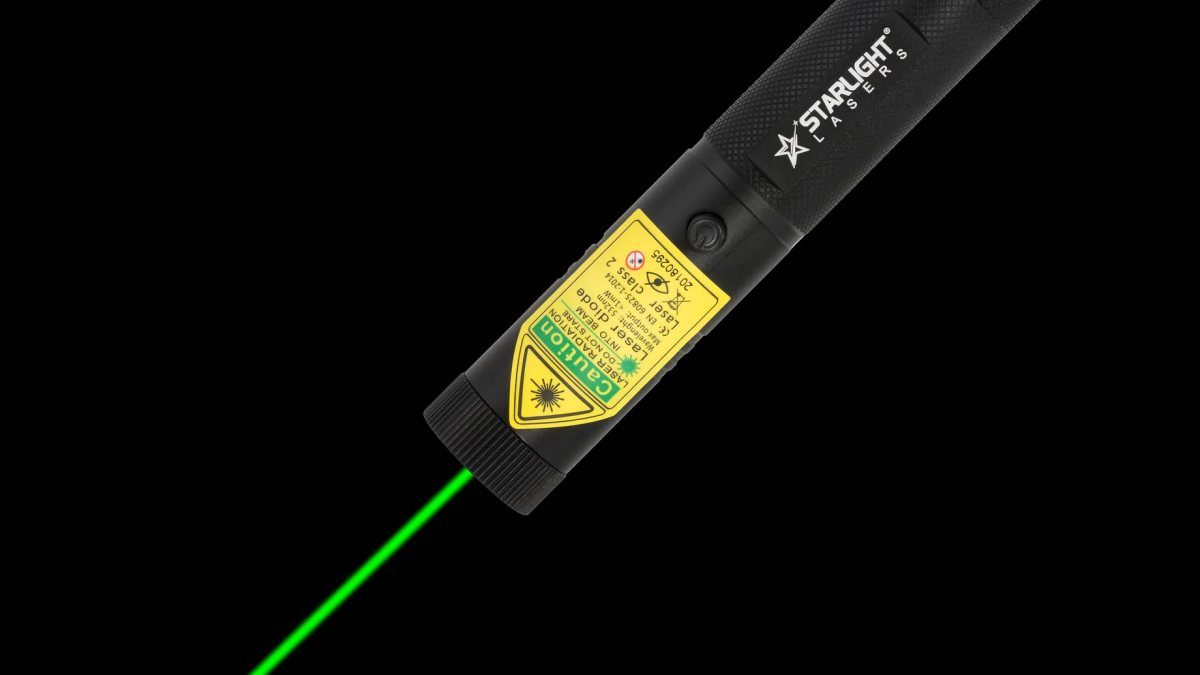
Most bird problems follow the same pattern. The birds find a spot they like – a roof ridge, a boat deck, a hedge, a field – and come back every evening because nothing has ever bothered them there. A laser does not hurt them and does not make a sound, but it does make that spot feel unsafe. Used consistently, in the right light, that is often enough to make them settle somewhere else. This guide is the plan we give customers who ask how to scare birds with a laser pointer, site by site.
First: what a laser can and cannot do
A laser bird scarer works because birds react to a bright, unexpected object moving towards them. It is not a force field. Some points to be clear about before you start:
- Light matters most. Consumer lasers sold in the UK are class 2, up to 1 mW. At dusk and dawn the green dot is clearly visible (approx. 300 m, indicative); in bright sun it only shows on shaded surfaces at shorter range. Work in low light.
- Green beats red. Birds and people alike see green best. At field and roof distances, red and violet are too faint to bother most birds.
- Consistency wins. One evening rarely solves a problem. Five or six evenings in a row at roosting time usually changes the birds’ habits.
- It moves birds, it does not remove them. They will go somewhere. Think about where – a neighbour’s roof or the field next door may not be the result you want.
Range (indicative)
| Conditions | Visible dot |
|---|---|
| Indoors | 30 m+ (a whole room or hall) |
| Daylight (dot on a shaded surface) | approx. 100 m |
| Dusk and dawn | approx. 300 m |
| Dark | approx. 1 km (dot); beam faintly visible in very dark, humid air |
The basic technique
- Pick your moment. Start as the birds arrive to roost or settle, usually from sunset into dusk; or at first light before they leave.
- Check the line of fire. Look at everything beyond your target: roads, houses, windows, people, livestock, boats, aircraft. If any of them could be in the path of the beam, change position.
- Dot on the surface, not on the bird. Put the dot on the roof, the ground or the rail a metre or two from the nearest birds.
- Slide it towards them. Slow and steady. Most birds lift off as the dot approaches.
- Switch off. Once they go, stop. Repeat only if they come back.
Site by site
The garden and allotment
Wood pigeons stripping brassicas and feral pigeons on the shed roof are the classic garden complaint. Stand where you have a clear view of the roof or bed, and wait for the evening arrivals. Bring the dot in along the ridge from the far end. In a garden you rarely need range, so a simple X1 green laser pen on AAA batteries is often enough. Be especially careful with neighbouring windows – a dot on glass reflects. More detail in keeping pigeons off your roof.
The farmyard and barns
Pigeons and starlings in barns soil feed and machinery. Work at dusk from the doorway, sweeping the dot along the beam or purlin beside the birds. Avoid aiming up into metal sheeting: shiny surfaces can bounce the light back. For daily use a rechargeable laser saves a lot of AAA batteries – the G3 Pro is the one most farmers choose, with safety keys so it can live in the tractor cab.
Fields: geese and corvids
Geese grazing winter wheat or oilseed rape can do real damage. Visit the field at dusk, when they are settling, and sweep the dot across the ground in front of the flock. Distances are bigger here, so green and a full-size Pro laser are the right choice. Make sure there is nothing beyond the field in the beam’s path – a road, a house, a footpath.
Boats and moorings
Gulls and cormorants love a quiet deck. A compact laser that lives in the boat bag, such as the G2 Pro, lets you move them on as soon as you arrive. On the water be extra careful: never sweep the beam across the surface (water reflects), never towards other boats or the shore, and never near a harbour with aircraft overhead. Our guide to keeping gulls off your boat goes into detail.
Commercial roofs, terraces and warehouses
Gulls on a restaurant terrace or pigeons on a warehouse roof can become a hygiene problem. Here the laser is one tool among several. Use it at closing time and at first light, and combine it with removing food sources. If staff share the laser, choose a model with safety keys and agree who holds the key.
Starling roosts
Starlings gather in huge numbers in trees, reed beds and hedges at dusk. It is far easier to prevent a roost forming than to shift one that has settled, so start as the first small groups arrive and keep the dot moving through the trees they are heading for. See how to move a starling roost.
Common mistakes
- Working in full daylight and concluding “it doesn’t work”. Try again at dusk.
- Flicking the dot about. A frantic dot looks less like an approaching threat than a steady one.
- Aiming at the birds. Never. The dot goes on the surface beside them.
- Giving up after one night. Habits take several evenings to break.
- Using red at distance. Red is fine on a shed roof across a small garden; for a field or a barn ridge use green.
The UK rules you need to know
All wild birds are protected in the UK. Scaring birds away from crops, property or a boat is generally fine; harming them, or damaging or destroying an active nest, is an offence. So plan bird deterrence for the autumn and winter where you can, and leave nests in use alone. Some species have extra protection, and for large-scale or commercial problems a licensed pest controller can advise.
Then there is the laser itself. Never point a laser at an aircraft, a vehicle or a boat, and stay well away from airfields – shining a laser at a vehicle or aircraft is a criminal offence. Never aim at people or animals’ eyes, and keep the laser away from children. Our laser pointer safety page has the full list.
Which laser?
For most people: the G3 Pro – green, rechargeable, two safety keys and our best-selling laser. If it needs to fit a pocket, the G2 Pro. For a garden and occasional use, the X1. Every model is class 2, up to 1 mW – the class intended for sale to the public in the UK. Our laser pointer for scaring birds page sums up the choice, and all green lasers are under green laser pointers.
More articles
Blog
Stargazing with a Laser Pointer: What to Show in UK Skies, Season by Season
A green laser pointer makes it easy to show friends and family the stars. How to use one well, what to expect…
How to Keep Pigeons off Your Roof with a Laser Pointer
Pigeons on the ridge, in the gutter and on the solar panels? How to use a green laser pointer to break their e…
Keeping Seagulls off Your Boat, Mooring or Terrace with a Laser Pointer
Gulls on the deck, the wheelhouse roof or the café terrace? How boat owners and businesses use a green laser a…