
Keeping Seagulls off Your Boat, Mooring or Terrace with a Laser Pointer
Gulls on the deck, the wheelhouse roof or the café terrace? How boat owners and businesses use a green laser at dusk and dawn – safely, around water, other boats and the public.
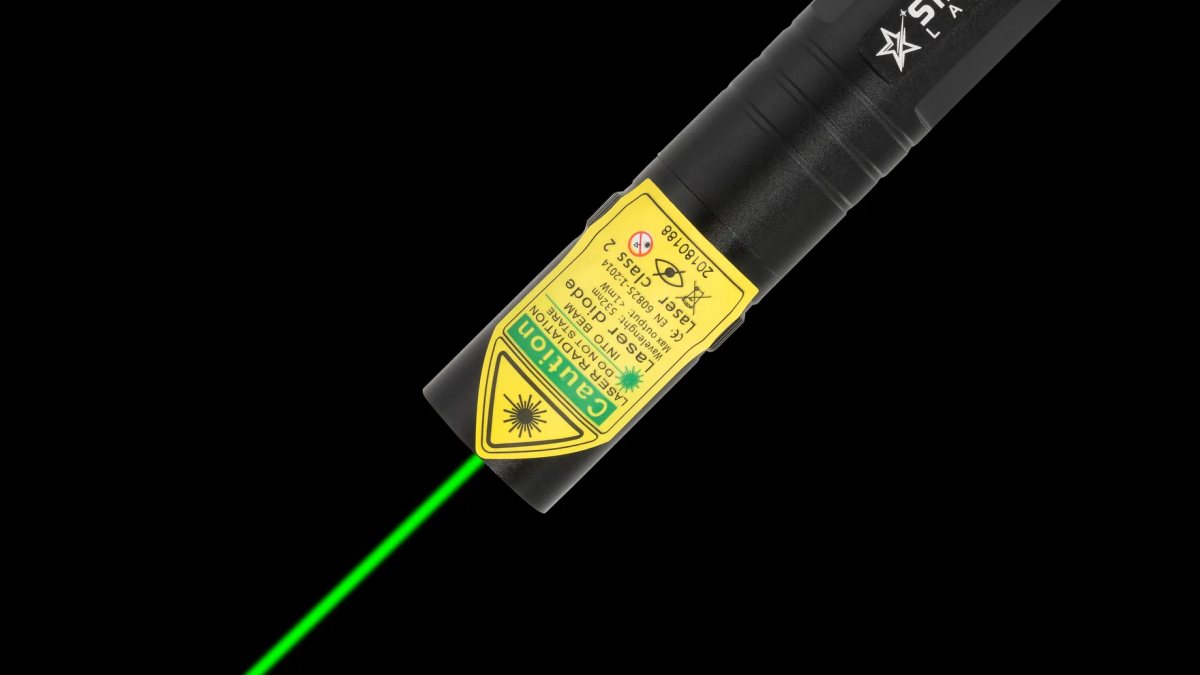
Anyone who keeps a boat on a mooring knows the morning ritual: arrive at the boat, find gulls on the cabin roof and a deck that needs scrubbing before you can sail. Café owners on the seafront know a version of it too – gulls on the terrace rails at closing time, waiting for the last chips. A green laser pointer is one of the simplest tools for this: no noise, no chemicals, nothing to install. But on and near water there are a few extra rules. Here is how to do it well.
Why gulls are different
Herring gulls and lesser black-backed gulls are intelligent, bold and quick to learn. They work out very fast which threats are real. That has two consequences. First, a laser works best when it is used consistently, at the times the gulls settle. Second, it works best combined with taking away whatever brought them in the first place: food, shelter, a quiet perch.
Gulls, like all wild birds in the UK, are protected. Moving them on is fine; harming them or disturbing an active nest is not. Gulls nest on roofs in towns from spring into summer, so plan any deterrence of roof-nesting gulls before the season starts.
Timing
Our lasers are class 2, up to 1 mW – the class intended for sale to the public in the UK. On water in bright sun, a class 2 dot is hard to see except on shaded surfaces. At dusk and dawn it is clearly visible (approx. 300 m with green, indicative), which is also when gulls come in to rest on boats and roofs. So arrive early or stay late.
Range (indicative)
| Conditions | Visible dot |
|---|---|
| Indoors | 30 m+ (a whole room or hall) |
| Daylight (dot on a shaded surface) | approx. 100 m |
| Dusk and dawn | approx. 300 m |
| Dark | approx. 1 km (dot); beam faintly visible in very dark, humid air |
On your own boat
- Check all around. Other boats, crews, people on the pontoon or the shore, the harbour office windows, the sky. Nothing should be in line with or behind your target.
- Aim at your own boat. Put the dot on your deck, coachroof or rail – not on the water and never on another vessel.
- Move it slowly towards the birds until they lift off. Never put the dot on a gull.
- Switch off as soon as they go.
Why never on the water? Water is a mirror. A dot on a calm surface can reflect at an angle you did not expect – into someone’s eyes on another boat, or towards the shore. Keep the beam on solid, matt surfaces.
On moorings and pontoons
If you share a pontoon, have a word with your neighbours first. Most will be glad of fewer gulls, but nobody likes a surprise laser dot. Work only on your own boat and the stretch of pontoon beside it. If you are in a marina, check the marina rules: some have their own policies on bird control.
Terraces, roofs and seafront businesses
For cafés, pubs and seafront shops, the laser is most useful at closing time and first thing in the morning, when the terrace is empty. Sweep the dot along the rails, the tables and the roof edge where the gulls gather. Never use it while customers are present, and never across the street or the promenade. Combine it with:
- clearing tables quickly and using lidded bins;
- not leaving food out after closing;
- proofing flat roofs and ledges where gulls like to nest, outside the nesting season.
If staff share the laser, choose a model with safety keys and agree who keeps the key.
Which laser for boats?
Space on a boat is precious and things get knocked about, so many owners choose the compact G2 Pro: rechargeable, aluminium, 12 cm, easy to keep in the chart-table drawer or a grab bag. If the boat is used by family or crew, the G3 Pro has two safety keys. For a boat that sits for weeks between visits, the X1 on AAA batteries is a simple choice – take the batteries out when you leave.
Damp sea air is hard on any electrical device. Store the laser in a dry place, wipe it down after use, and keep spare cells in a sealed bag. Our batteries and charger page has spares, and a second PowerFox charger charges from any mains socket.
Mistakes we hear about
- Trying at midday in bright sun on white decks – the dot is hard to see. Try again at dusk.
- Chasing gulls in flight – pointless and risky; the beam ends up in the sky. Only use the dot on surfaces.
- Doing it once. Gulls test you. Be there at the same time for several days.
- Ignoring the food. If there are scraps on deck or chips on the terrace, the gulls will keep coming back.
Safety and the law
Never point a laser at another boat, its crew, a vehicle or an aircraft. Under UK law it is an offence to shine a laser at a vehicle – including vessels – in a way that dazzles or distracts the person in control. Never aim at anyone’s eyes, human or animal, and keep the laser away from children. Our laser pointer safety page has the full rules, and how to scare birds with a laser pointer covers other species and sites.
More articles
Blog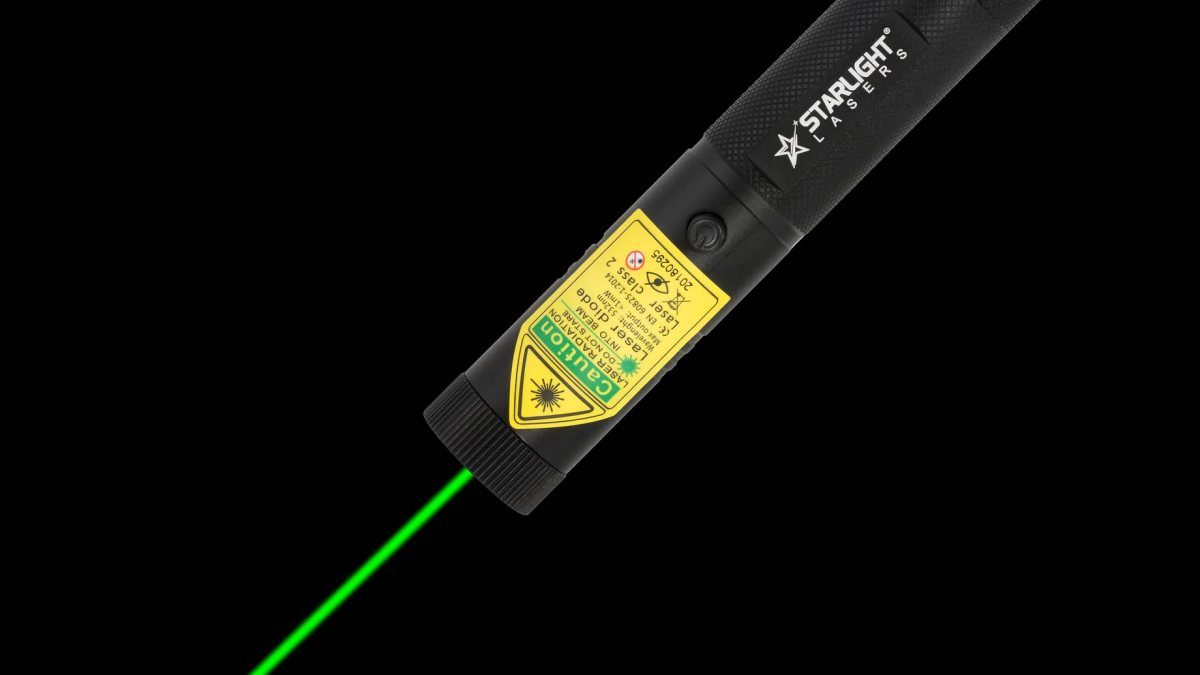
How to Scare Birds with a Laser Pointer: A Practical Plan for Farms, Gardens and Boats
Pigeons on the roof, gulls on the boat, starlings in the hedge, geese on the winter wheat: a site-by-site plan…
Stargazing with a Laser Pointer: What to Show in UK Skies, Season by Season
A green laser pointer makes it easy to show friends and family the stars. How to use one well, what to expect…
How to Keep Pigeons off Your Roof with a Laser Pointer
Pigeons on the ridge, in the gutter and on the solar panels? How to use a green laser pointer to break their e…